
Bed linen has long ceased to be a purely functional element of the bedroom. Its aesthetic qualities directly affect the perception of space, a person’s emotional state, and the quality of rest. We spend a significant part of our lives in the bedroom, so its visual design, and especially the color of textiles, plays a far more important role than it may seem at first glance.
In addition, the choice of color, patterns, and shades of bed linen is rarely accidental. It is shaped by personal aesthetic preferences, age, gender, life experience, and the current emotional state.
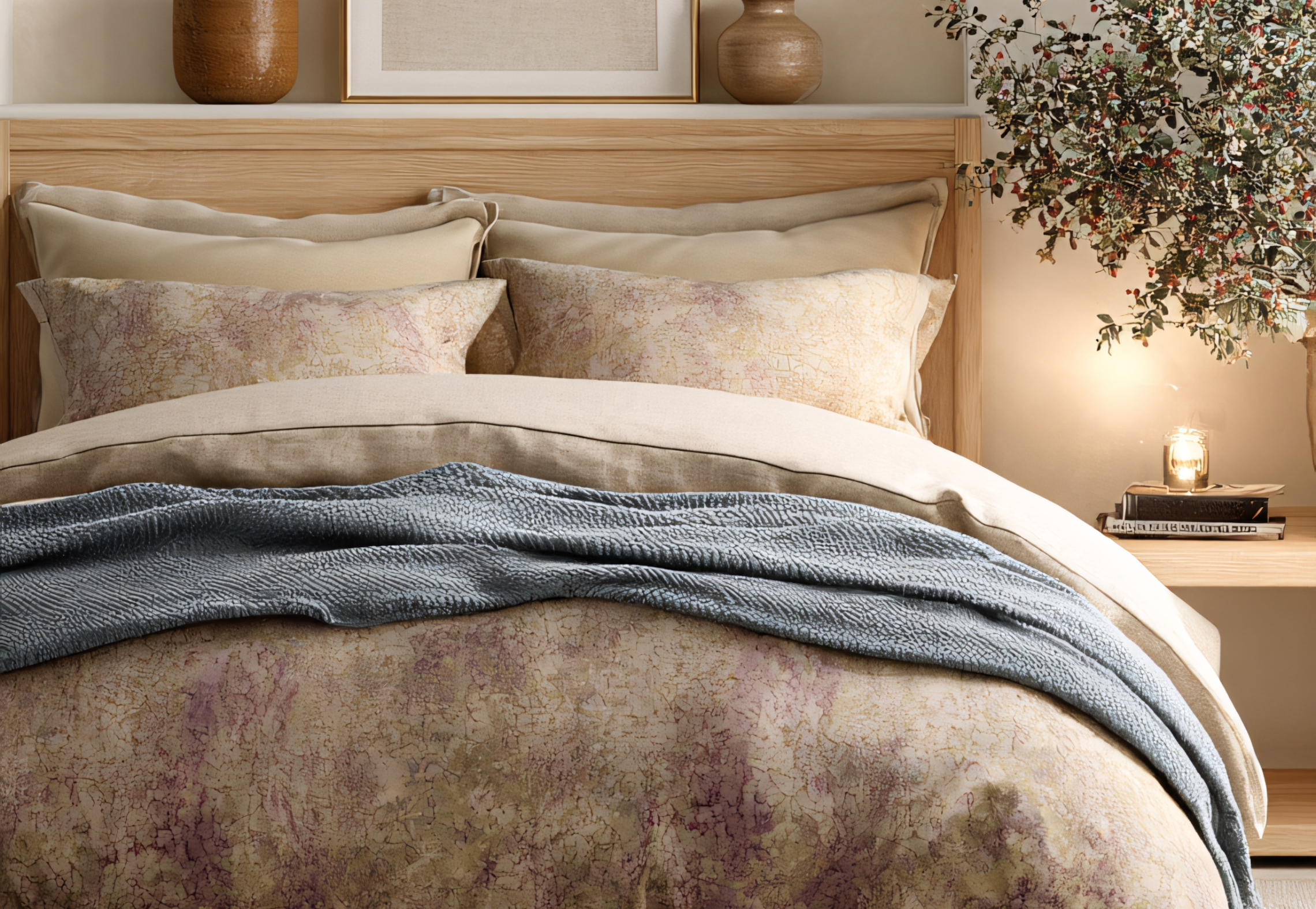 Aesthetic preferences and individual perception of color
The color of bed linen often reflects a person’s inner world. Some gravitate toward calm, neutral shades, while others choose rich or contrasting solutions. This is connected not only with taste, but also with the emotions a person wants to experience in the bedroom space.
- Light and soft tones create a sense of cleanliness, order, and lightness.
- Deep, dark shades add coziness, intimacy, and a feeling of protection.
- Bright colors and complex prints are more often chosen by people for whom a sense of dynamics and visual expressiveness is important even in a resting area.
Over time, aesthetic preferences may change. What once pleased the eye can later feel excessive or tiring. For this reason, the choice of bed linen color often becomes an intuitive indicator of inner change.
Bed linen color and gender differences
.png) Although there are no strict rules, certain patterns in color choice can be observed. Men more often prefer restrained, cool, or neutral shades. Gray, blue, dark green, and graphite are perceived as calm and orderly. Such colors create a sense of control and visual balance.
Although there are no strict rules, certain patterns in color choice can be observed. Men more often prefer restrained, cool, or neutral shades. Gray, blue, dark green, and graphite are perceived as calm and orderly. Such colors create a sense of control and visual balance.
Women, as a rule, more often choose a warmer and more diverse palette. Pastel shades, complex color combinations, and soft prints help create an emotionally comfortable atmosphere. At the same time, with age, preferences often shift from bright and contrasting solutions toward calmer and more noble tones.
It is important to understand that these are tendencies rather than rules. Individual experience, character, and lifestyle have a much greater influence than gender itself.
Age and changes in color preferences
Age plays a noticeable role in the choice of textile shades. In childhood, preference is given to light, cheerful, and saturated colors associated with play and imagination. During adolescence, contrasts, experimentation, and a desire for self-expression through color become more apparent.
In adulthood, choices become more restrained. The color of bed linen begins to serve not only aesthetics, but also the need for rest. Pastel and muted shades help to relax and reduce visual noise. In mature age, interest often grows toward natural palettes and earthy colors that are associated with stability and comfort.
Influence of color on well-being and mood
The color of bed linen can influence emotional state and sleep quality. An incorrectly chosen color may cause hidden tension, irritation, or a sense of discomfort, even if this is not consciously recognized.
Cool and neutral shades visually cool the space and help reduce the level of stimulation before sleep. Warm colors create a feeling of coziness and security, but in excess they may cause a sense of overload.
A light palette contributes to a feeling of freshness and cleanliness and helps to relax faster. Dark shades add depth and intimacy, but they require balance with lighting and the rest of the bedroom interior.
Conscious color choice as an element of self-care
Bed linen is part of a personal space where a person restores energy. A conscious choice of color helps create an environment that supports emotional balance.
- During periods of fatigue and stress, there is often a need for calm and soft shades.
- In moments of inner stability, the desire for color or expressive accents may appear.
The color of bed linen works subtly and almost imperceptibly, yet its impact on mood and well-being is difficult to overestimate. It is not just an interior element, but a tool for shaping comfort, quality of rest, and an overall sense of harmony in everyday life.
The role of pillows in human life was discussed in the previous blog.