
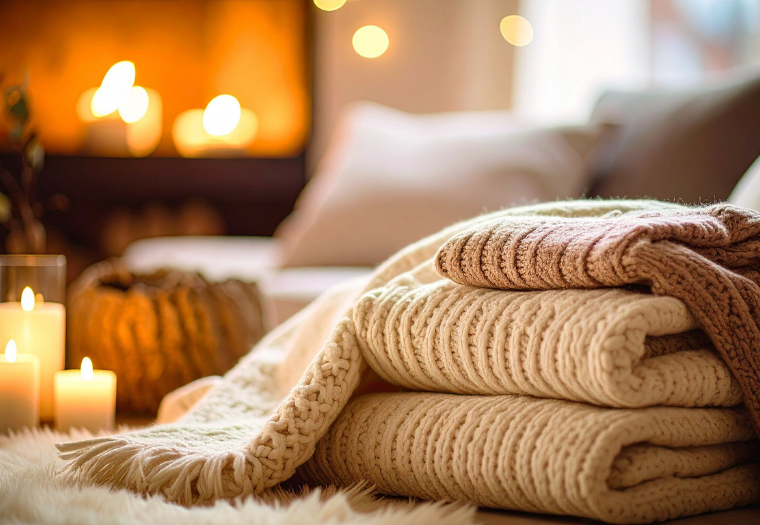
 For decades, the textile industry has focused primarily on visual perception. Cut, silhouette, color, print, and stylistic codes have been the main tools in clothing and interior design.
In recent years, the very understanding of textiles has been undergoing a profound transformation. Consumer attention is shifting from external form to the sensations a thing evokes when touched. Tactility is becoming a new language of fashion that works not through image but through bodily experience.
Textiles with pleasant textures help a person feel connected to their own body and the surrounding space. They help reduce anxiety and restore a sense of stability. Therefore, the demand for soft, “living” materials is growing, while smooth and cold surfaces are gradually giving way to more sensory solutions.
Changing lifestyle and the need for coziness
Modern people live in conditions of high speed, information overload, and constant task-switching. This is why the concept of “coziness” acquires a new meaning – it refers to what supports psychological balance.
The new role of home space
In the era of remote and hybrid work, millions of people spend most of their time at home. This is not only a change in the geography of work but also a shift in the perception of personal space. If earlier the home was a zone of rest, now it has become a zone of constant presence, which has increased the demand for:
- tactile materials that are pleasant to interact with every day;
- practicality and durability of objects;
- visual and sensory comfort.
People strive to surround themselves with items that create a calm atmosphere and help them switch smoothly between tasks.
Rising stress levels and the search for emotional refuge
.png) Global uncertainty, accelerated life pace, and high dependence on technology all increase stress. Instinctively, people reach for things that restore the feeling of control and stability. Soft surfaces, warm textures, and pleasant-to-the-touch materials act as emotional “anchors”, allowing a person to slow down and feel protected.
Global uncertainty, accelerated life pace, and high dependence on technology all increase stress. Instinctively, people reach for things that restore the feeling of control and stability. Soft surfaces, warm textures, and pleasant-to-the-touch materials act as emotional “anchors”, allowing a person to slow down and feel protected.
The need for “live” contact
Many people experience a lack of live interaction. This factor, combined with increased screen time, has elevated the importance of tactile stimulation.
Materials that are pleasant to touch have become a kind of anti-stress objects capable of improving mood and reducing tension. This explains the rapid rise in popularity of:
- fleece fabrics;
- soft knits;
- chunky weaves;
- velvet and velour;
- textiles with down or foam filling.
These materials fill the space with a sense of warmth and safety.
The philosophy of anti-stress textiles
Anti-stress textiles are a reflection of a new cultural need. They are a response to growing sensory overload, the accelerating pace of life, and emotional exhaustion. Fabrics no longer serve only decorative or utilitarian purposes. They become a means of psychological balance, a tool that helps reduce stress and restore inner equilibrium. The philosophy of anti-stress textiles is built around the idea that material sensations can work like gentle therapeutic practices.
A person perceives the world through the body. Tactile sensations form a sense of safety, coziness, and emotional calm.
- The soft surface of a blanket.
- The smoothness of satin.
- The velvety feel of microfiber.
- The volume of knitted textures.
All these micro-sensations are interpreted by the brain as comfort. This is why anti-stress textiles are so important in conditions of constant tension. They help reduce anxiety levels by influencing the nervous system through sensory contact.
Anti-stress textiles rely on several key principles:
- A sense of protection. This is achieved through soft, enveloping textures, muted colors, and materials capable of retaining warmth. They create a “cocoon” – a personal space where one can relax and restore energy.
- Tactile therapy. Fabrics with voluminous structures or fine textures provide gentle stimulation of receptors, helping relieve tension and improving emotional well-being.
Anti-stress textiles are shaping new standards in home and everyday environments. They influence interior design, fashion, and our consumer habits. People have become more attentive to the sensations each item evokes:
- in clothing, this is expressed in the popularity of soft knits, fleece, non-irritant fabrics without rigid seams;
- in interiors, in the growing demand for fabrics that create a sense of safety – velour, micro-plush, dense cotton, wool.
The philosophy of anti-stress textiles is part of a broader movement toward emotional well-being. It reminds us that self-care begins with small things – with the objects that surround us and the sensations they provide. In a world full of uncertainty, tactile comfort becomes one of the most accessible forms of inner refuge.