
 White fabric remains one of the most sought-after options in clothing, home textiles and interior décor.
White materials are associated with cleanliness, lightness and versatility. They easily fit into any style, help visually refresh a space and create a sense of neatness.
In clothing, white emphasizes naturalness, works well for both formal and casual looks and pairs effortlessly with other shades. In addition, white fabric reflects light and heat better, making it comfortable for warm seasons.
Despite their aesthetic appeal, light materials are particularly sensitive to external factors and require delicate and systematic care. Proper washing, careful drying and following material-specific recommendations help preserve the freshness and brightness of white textiles for much longer.
Preparing White Textiles for Washing
A key stage that directly affects the freshness, durability and brightness of the fabric is proper preparation before washing. If this step is neglected, even high-quality detergents and modern washing machines won’t deliver the desired result.
Sorting the Fabric
Before washing, it’s important to divide textiles into several groups to prevent dye transfer and fiber damage:
- separate white items from colored and pastel ones;
- sort fabrics by fiber type – cotton, linen, synthetics, delicate materials;
- keep heavily soiled items apart from those that only need a light refresh wash.
Always check the care label. Every textile has its own characteristics, and the label helps you choose the proper washing mode.
Pre-treatment
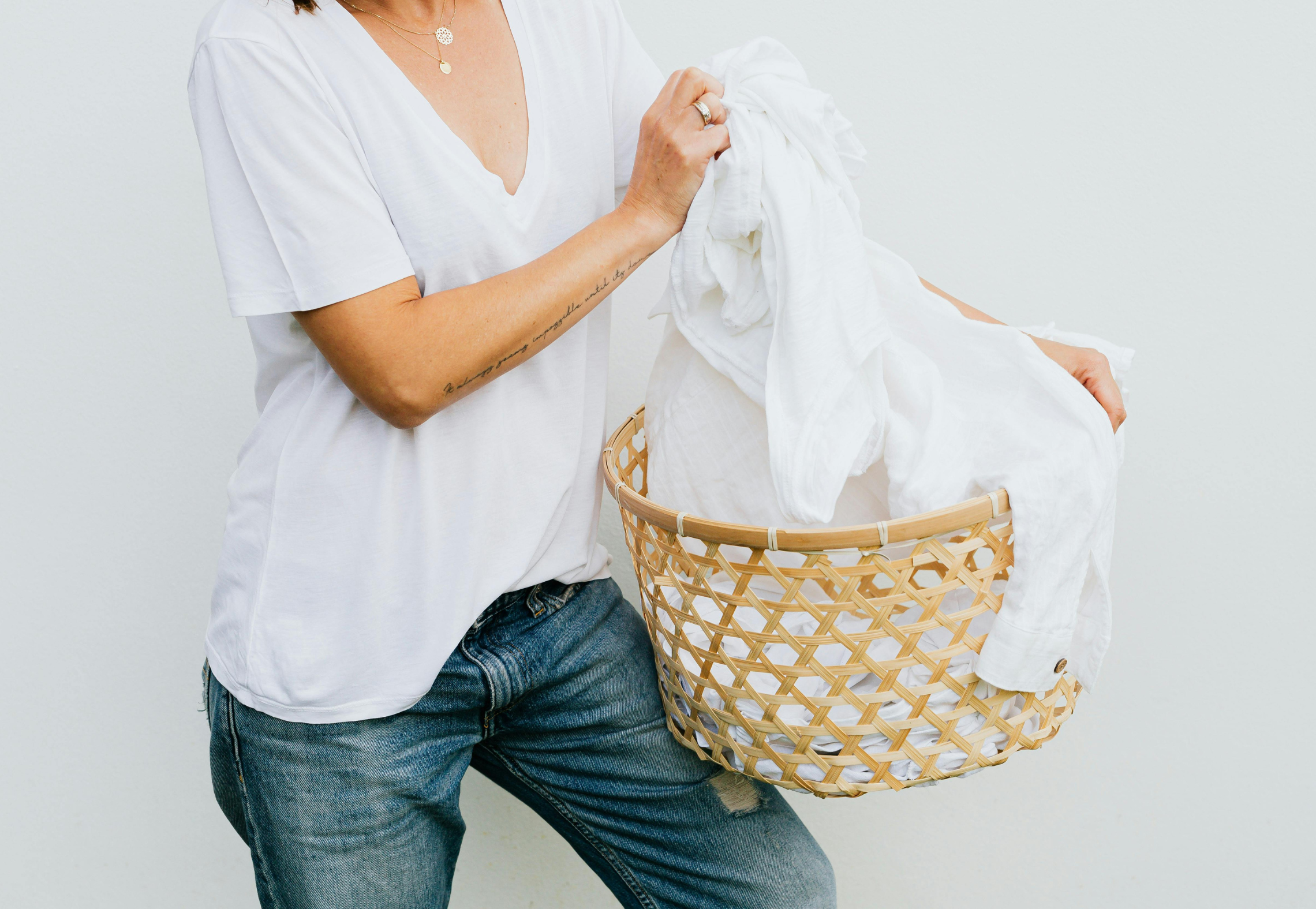 Stains from sweat, cosmetics, oils and household dirt require pre-treatment; otherwise, they can set when exposed to heat. Treat stains with a mild stain remover or an oxygen-based bleach solution. Pay special attention to collars, cuffs and underarm areas. Avoid chlorine – it can damage the color and weaken the fibers.
Safe Loading into the Washing Machine
Small objects or metal parts can damage the fabric or the machine drum:
- empty pockets completely;
- close zippers and buttons;
- turn garments inside out if the fabric is thin or prone to snagging.
For delicate white textiles, use special laundry bags to provide extra protection.
Proper preparation not only helps maintain the brightness and freshness of white items but also extends their lifespan. This stage lays the foundation for cleanliness, which cannot be compensated for simply by using a strong detergent or high water temperature.
Choosing a Detergent
White items are especially sensitive to detergent composition, so this factor is crucial.
Type of Detergent – Powder, Gel or Capsules
The choice depends on the type of stains and fabric properties.
Powders are suitable for cotton and dense fabrics. They often contain whitening agents and work well on tough stains.
Gels dissolve better in water, leave no residue and are ideal for delicate materials.
Capsules offer precise dosing and convenience, but their formula may not always be suitable for delicate fabrics.
Oxygen Bleach and Enzymes
For white fabrics, it's best to choose detergents with gentle whitening components:
- oxygen-based bleaches help restore whiteness, brighten grayish tones and remove stubborn stains without damaging fibers;
- enzymes effectively break down organic stains – sweat, food, cosmetics. They work gently and safely at moderate temperatures.
Matching the Detergent to the Fabric
Different fabrics require different care:
- cotton and linen respond well to powder or combined detergents;
- synthetics and delicate materials require mild gels without abrasive particles;
- for baby textiles or sensitive fabrics, choose hypoallergenic detergents without strong fragrances.
The right detergent helps white fabrics retain freshness, brightness and cleanliness much longer.
Temperature Settings
Each material has its own safe and effective washing temperature:
- Cotton – 40–60 °C. For heavy soiling, 60 °C is acceptable, but for thinner fabrics, 40 °C with a quality detergent is preferable.
- Linen – 40–60 °C. Natural fibers tolerate high heat but require thorough rinsing.
- Microfiber – 30–40 °C. Hot water can damage the fibers, set stains and cause discoloration.
- Silk and viscose – only 30 °C, using the “delicate” mode.
Proper temperature selection helps preserve the fresh appearance and extends the lifespan of the textile.
Rinsing and Drying – Key to Cleanliness and Brightness
The main purpose of rinsing is to remove all detergent residue and dirt particles. Insufficient rinsing can have the opposite effect: the fabric becomes dull, stiff and gradually turns gray.
- use an extra rinse cycle, especially for dense fabrics and bedding;
- avoid overloading the drum – more items mean poorer water circulation;
- select intensive rinse programs for cotton and terry fabrics;
- if you have hard water, use additives that help remove detergent remains.
Undissolved detergent particles can leave gray streaks, cause irritation and reduce the longevity of the fabric. This is especially important for bedding, towels and clothing that touches the skin directly.
Air Drying
This is the best method for white textiles:
- dry items outdoors or on a balcony with good airflow;
- avoid direct sunlight, as UV exposure may cause yellowing or weaken fibers;
- smooth out the fabric before drying – this reduces creasing and facilitates further care.
If outdoor drying isn’t possible:
- choose the most ventilated indoor area;
- avoid placing items near heaters – excessive heat can cause yellowing and a musty smell;
- make sure textiles do not touch metal surfaces, which may leave gray marks.
Proper rinsing and correct drying help white fabrics maintain their brightness, cleanliness and fresh appearance.
We wrote about the trend for anti-stress materials in our previous blog.